Australia’s World First Social Media Ban and the Global Ripple Effect
December 16, 2025 • Patrick Meki
Introduction
Last week, on December 10, 2025, while many were focused on the usual end-of-year tech wrap-ups, Australia quietly flipped the switch on the most aggressive internet regulation legislation seen in a Western democracy.
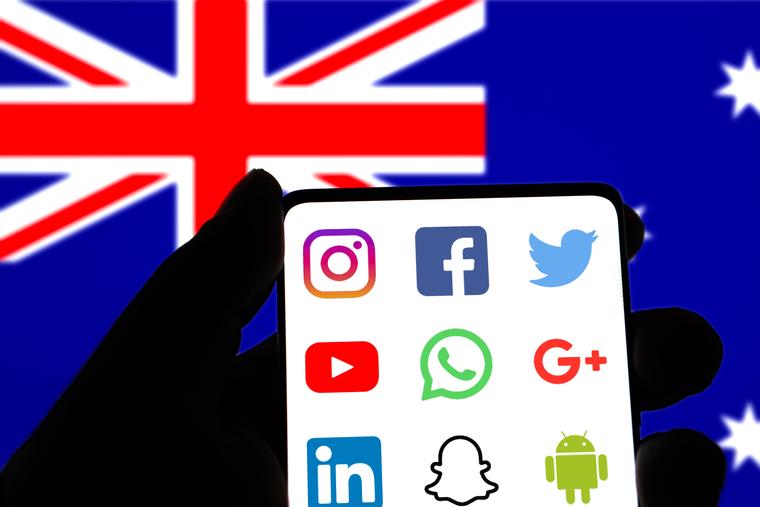
The Online Safety Amendment Act is now live. It is the first nationwide law globally to place a blanket ban on children under the age of 16 holding accounts on major social media platforms like TikTok, Instagram, Snapchat, Reddit, Facebook and X.
Australia has lit the fuse. With the Online Safety Amendment Act now in force, the nation has launched an unprecedented experiment: a blanket ban on social media accounts for children under 16. This isn't just a policy shift—it's a direct response to the escalating digital dangers targeting our youth.
For cybersecurity professionals and parents alike, this move highlights the critical risks that prompted such drastic action.
The Dangers Driving the Ban
1. Mental Health in the Algorithmic Crosshairs
Platforms are engineered for engagement, often serving content that can trap young minds in cycles of social comparison, cyberbullying, and distorted self-image. The link between heavy social media use and rising anxiety and depression in teens is a primary catalyst for this law.
2. Predators and Inappropriate Contact
Social media can be a hunting ground. The relative anonymity and connectivity enable grooming, harassment, and exposure to harmful adults or dangerous ideologies, often away from parental sight.
3. Data Harvesting & The Permanent Digital Footprint
Children’s data—their locations, interests, faces, and behaviors—is collected, profiled, and sold. This creates a lifelong identity footprint without their informed consent, exposing them to sophisticated manipulation and future privacy breaches.
4. The “Addiction-by-Design” Model
Features like infinite scroll and push notifications are built on neurological hooks, designed to maximize screen time at the expense of real-world development, sleep, and attention spans.
The Global Experiment Begins
Australia’s law places the enforcement burden squarely on tech giants, demanding they implement reliable age verification—a formidable cybersecurity and engineering challenge. Three critical questions emerge.
- Will facial scans or ID checks become the price of entry? And at what cost to privacy? This bold stroke reframes the global debate
- Is outright exclusion the only way to safeguard children, or does it risk stifling digital literacy and social connection? Other nations are watching closely.
- Will other nations follow with similar bans, or seek alternative paths like stringent default privacy settings and algorithmic transparency for young users?
One truth is undeniable: Australia’s move forces a long-overdue reckoning. It declares that the digital wild west for children is over, shifting the question from whether to protect them online to how we will fundamentally redesign their digital world. The rest of the globe must now decide if this is the catalyst for a new era of digital safety or a cautionary tale of overreach. For every parent and policymaker, the urgent conversation about our children’s digital lives has just been thrust into the spotlight.
As a cybersecurity associate, I’ve been watching this not just as a policy change, but as a massive, real-time experiment in digital identity, data privacy, and enforcement engineering. Australia has taken the plunge first, but the central question now remains: Will the rest of the world dive in after them?
And crucially for us watching from Silicon Savannah where does Kenya stand in this brave new world of age-gated internet?
The Australian Reality
To understand the future impact, we have to understand the current reality in Australia. The law is unique because it doesn’t punish the kids or the parents. It punishes the platforms. Tech giants to face fines upward of USD 33 million if they fail to take prompt actions as stipulated by the Act to keep under-16s off their platforms.
The immediate result has been chaos in compliance departments. How do you prove someone is 16 without invading the privacy of everyone else? Platforms are currently scrambling to implement varying combinations of government ID uploads and facial age-estimation AI.
From a security perspective, this is terrifying. To protect children, we are potentially creating the world's largest, centralized "honeypots" of sensitive identity data held by private entities which are the prime targets for sophisticated cyberattacks.
The Global Domino Effect
With Australia becoming the icebreaker and making the legislation a reality, the ball is up to other nations to see if the ice will hold or crack. Still, there are many countries that will likely copy what Australia has done and this I can simply explain it in terms of motivation and pressure as further illustrated below;
The Case for Following Suit – The Motivation
There has been immense political pressure globally regarding youth mental health and the addictive nature of algorithmic feeds. Parents in the UK, the EU, and North America are looking at Australia and asking their politicians, "If they can do it, why can't we?" We are likely to see similar bills accelerated in the European Union, which already has a strong regulatory framework under the GDPR and the Digital Services Act.
The Case for Hesitation – The Pressure
However, just like any other Act, the pushback is equally strong.
1. The Legal Challenges
Just days in, Reddit has already mounted a High Court challenge in Australia regarding freedom of political communication.
2. The Implementation Nightmare
Many governments will wait to see if Australia’s enforcement mechanisms actually work since nobody wants to pass a law that is instantly obsolete.
My prediction if you ask me? Some countries will copy Australia closely, while others will opt for "lite" versions perhaps focusing on stricter parental controls rather than outright bans.
Kenya’s POV
Back home here in Kenya, the conversation is complicated. We have a massive, incredibly youthful population highly connected to the digital world with an already significant concern amongst Kenyan parents and policymakers regarding cyberbullying, exposure to inappropriate content, and the "radicalization" potential of algorithms on platforms like TikTok.
Kenya has shown it is not afraid of digital regulation. We have a robust Data Protection Act enforced by the ODPC, and the Computer Misuse and Cybercrimes Act which strongly indicate a strong political will to “do something”. It is highly likely that Kenyan lawmakers are studying the Australian model. If the Australian implementation is perceived as a success meaning it reduces online harm without causing massive economic or social disruption you can expect similar bills to be drafted here in Kenya very quickly.
However, it’s also important to note that a copy-paste of the Australian law would face unique hurdles in Kenya due to:
1. The Side Hustle Economy
In Kenya, social media isn't just for socializing; for many youths, it's an economic lifeline. Young content creators, influencers, and digital marketers under 16 use these platforms to earn income. A blanket ban has different economic implications here than in a wealthy nation like Australia.
2. Identity Infrastructure
Australia is relying heavily on digital government IDs and sophisticated banking data for age verification. While Kenya has made great strides with digital ID initiatives, universal, reliable digital verification for every teenager across the country is a significant infrastructural challenge. Requiring ID uploads could also disenfranchise those in marginalized communities with less access to documentation.
Conclusion
Australia has fired first on a new era of internet regulation. For the next months or years to come, the world is in a "wait and see" pattern. If the Australian model crashes under the weight of legal challenges and technical workarounds, other countries will back away. But if it works even partially, expect the dominoes to start falling globally.
Contact South-End Tech Limited as the digital regulatory landscape evolves and data privacy becomes critical, ensuring your systems are prepared
Telephone: +254 115 867 309 | +254 740 196 519
Email: cybersecurity@southendtech.co.ke | info@southendtech.co.ke |